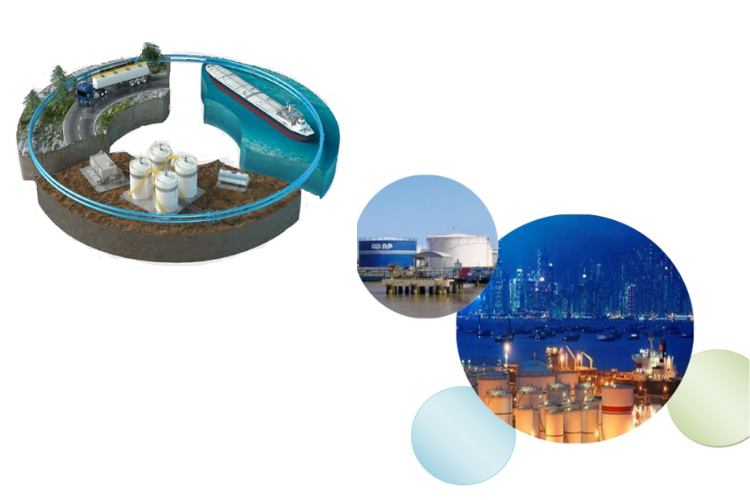
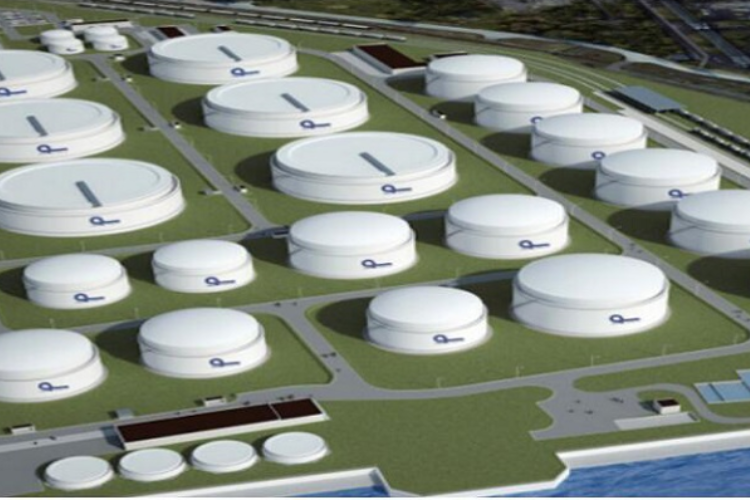
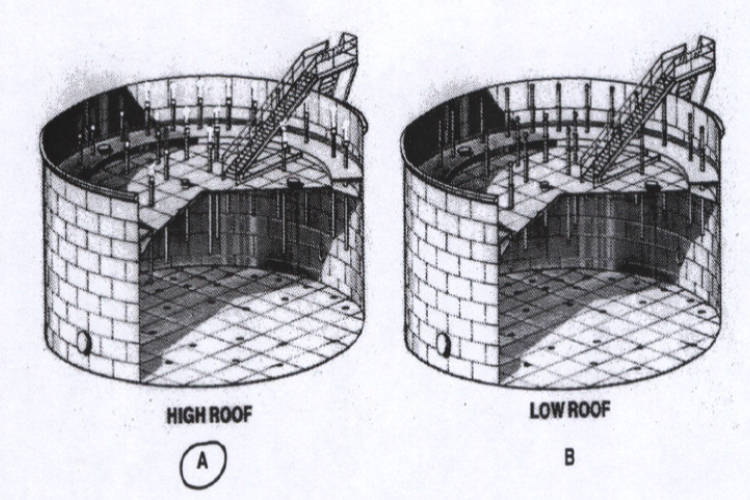
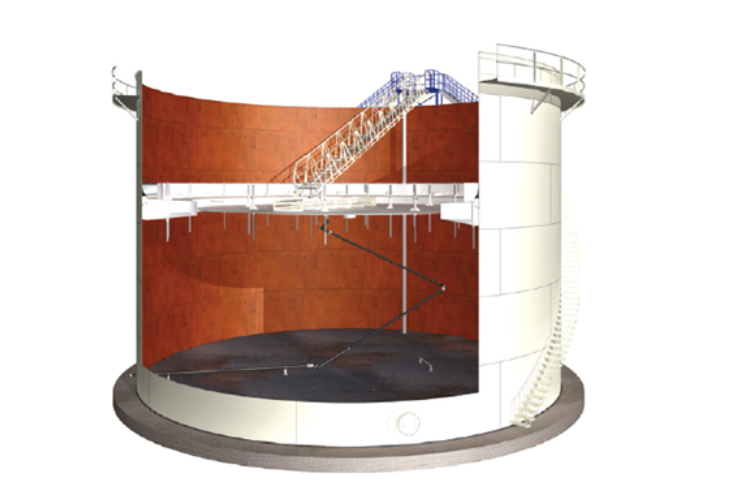
Which tank , which product. (Hangi Tank,Hangi Ürün)
The structure & assembly of the tank. (Tankın Yapısı ve Montajı)
Tank inspection (Tank İnçelemesi)
Measurement (Ölçüm)
To identify tank type & tank equipments (Tank Tipi ve Ekipmanları)
To know the limitation of tank (Tank Sınıfı)
Calculation of tank volume (Tank Haçmimi hesaplamak)
Safe tank operation (Güvenli Tank Çalışması)
1.API 650 (0 <InternalPressure<2.5 psig)
2.API 620 (2.5 <InternalPressure<15 psig)
3.API 12D (79.5m^3 to 1590m^3)
4.API 12F (14.3m^3 to 119.25m^3)
5.AWWA D100 (Atmospheric)
API 650 ed 12.Edition
Atmosphere Pressure Tanks
(Atmosfer Basınçlı Tanklar) Gasoil(benzin),Crude oil(ham petrol),Chemical(Kimyasal), Produce oil(Karışım Sıvılar), Kerosine,Diesel
API-620 Ed-11
Low Pressure Tanks Düşük basınçlı Tanklar)
(LNG(Sıvılaştırlmış Dogalgaz)
API 12D
This standard covers the design, manufacture and installation of vertical aboveground cylindrical tanks, steel fabricated and welded, with nominal capacities ranging from 79.5 m3 to 1590 m3 (in standard sizes).
API 12F
The requirements of this standard are similar to API 12D, in this case for tanks that will be manufactured at workshops, with nominal capacities ranging from 14.3 to 119.25 m3
AWWA D100
American Water Works Association”, “Standard for Welded Steel Elevated Tanks, Stand Pipes and Reservoirs for Water Storage”.
This directive does not establish specific equations or design methods to determine the design of the various components; on the contrary, it establishes general requirements associated with design loads, allowable stresses, radiographic examinations, etc. This directive should be used jointly with a design code. The directive states that API 650 code design methods may be used
The American Petroleum Industry (API) has established standards for the design, fabrication and construction of welded steel storage tanks for storing oil. The most popular tanks available on the market today are the 620 and 650 models, but which is right for you? The answer depends on what you require out of the product. API 620 regulates the design and manufacture of large steel low-pressure storage tanks, usually larger than 300 feet in diameter. By contrast, API Standard 650 is typically used for carbon, stainless steel and aluminum tanks located in terminals, refineries, pipelines and other process facilities. Both have different pressure and temperature parameters as well. Your choice of model will depend on you and/or your client’s particular needs
جدول
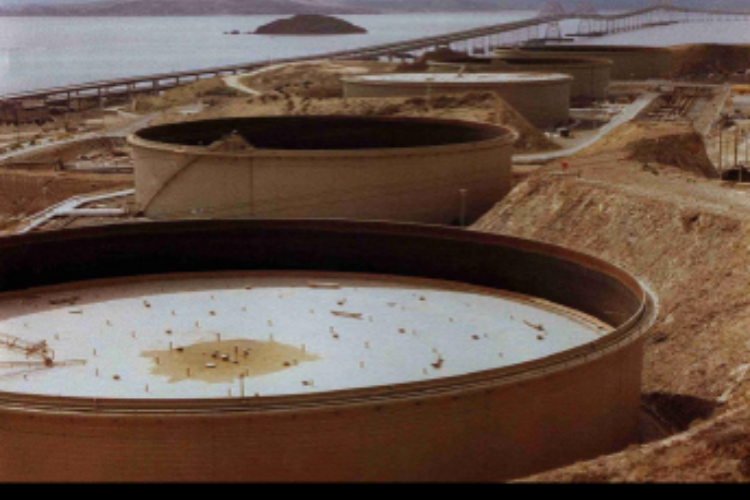
Atmospheric storage Tanks
Atmospheric storage is a term applied to tanks operating at or near atmosphericpressure. This type of tank is used to hold liquid which will not vaporize atambient temperature. Tanks used in this category are primarily the
a)open top roof
b)fixed roof (cone & dome)
c)floating roof
Pressurized storage
Pressurized storage applies to those vessels (mounded bullets) which aredesigned to withstand pressure sufficient to keep the liquid stored, fromvaporizing. High vapor pressure hydrocarbons such as propane, butane,iC5are the types of products requiring pressurized storage vessels
جدول
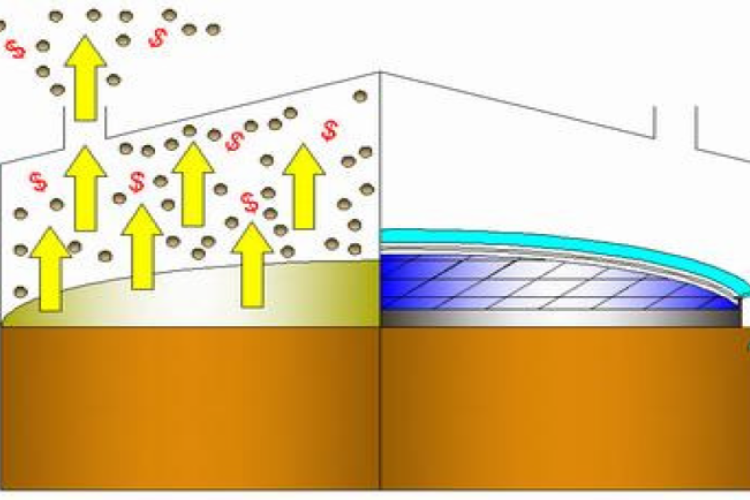
Standard vertical tanks are available in several types, which differ in vapor-saving efficiency and in cost.
Vertical tanks
1.Open top tanks
2.Fixed roof tanks
3.Fixed roof tanks with floating covers (internal floating roof tanks)
4.Floating roof tank
1.Open top tanks
This type of tank has no roof
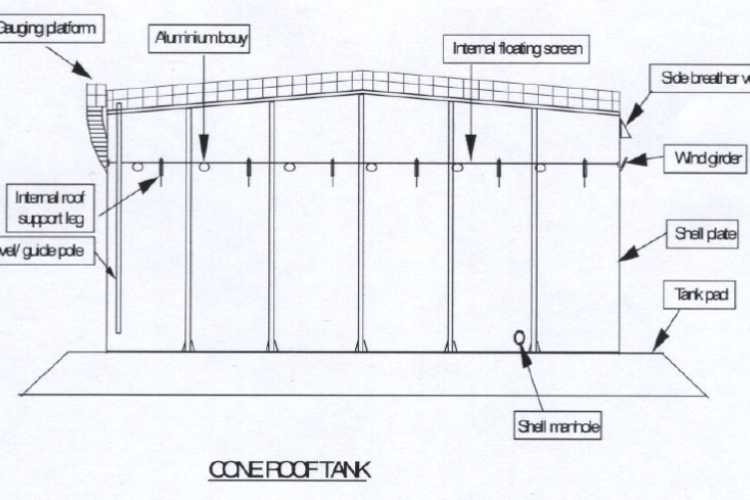
Fixed roof tanks
These types of tanks:
a)Cone Roof
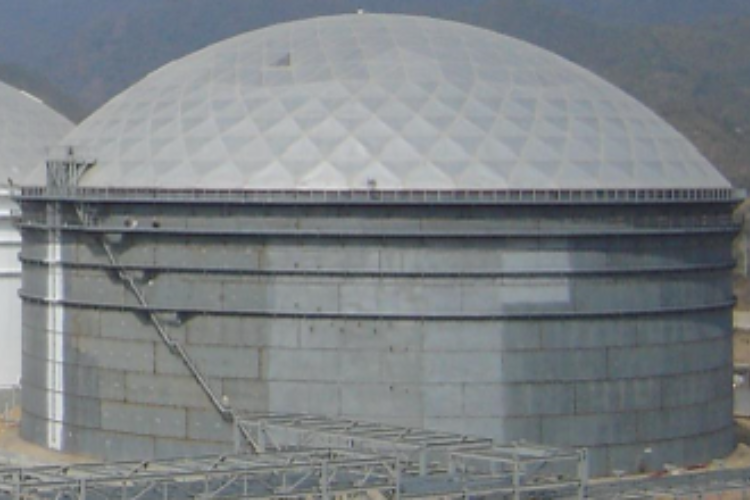
b)Dome Roof
a)Steel Plate
b)Aluminyum Plate
c)Flat Roof
d)Umbrella
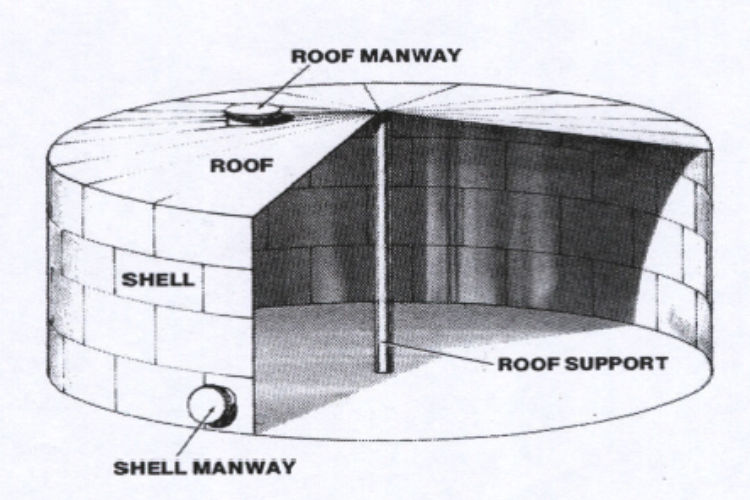
Tank
For safe storage of petroleum products, we have to consider the product properties such as volatility (RVP, pour point, flash point and others before we start designing and constructing the tank.
External Floating Roof Tank
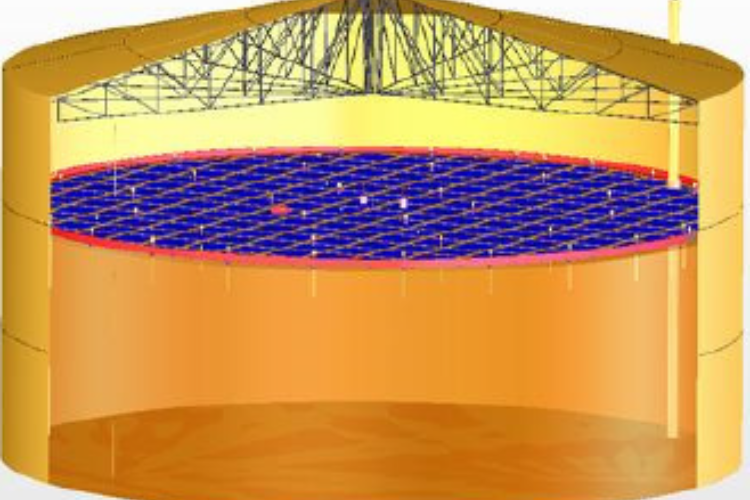
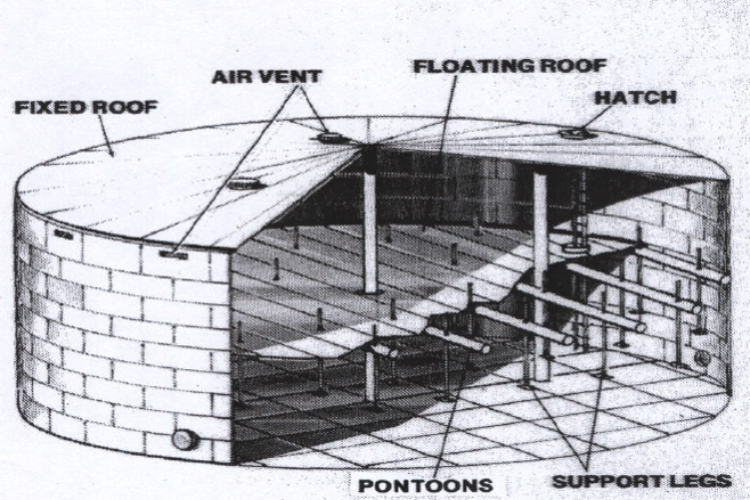
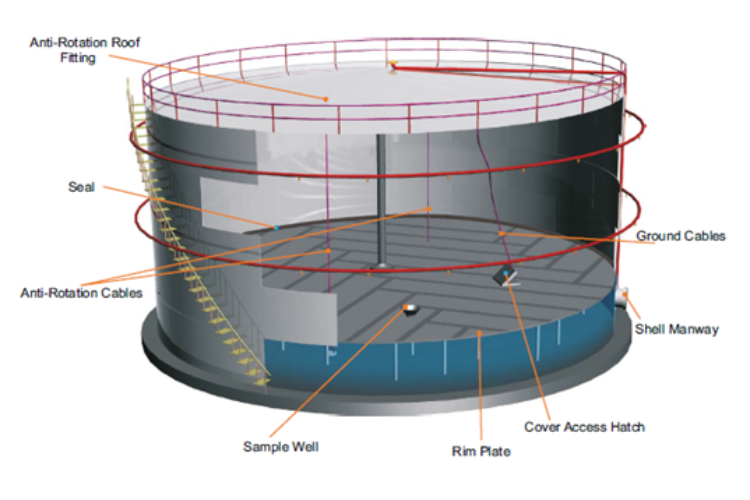
Internel Floating Roof Tank
Done Roof Tank
Cone Roof Tank
THE DESIGN OF THE TANK (Cont) (Tankın Tasarımı Devamı)
Internal Floating Roof Tank
THE DESIGN OF THE TANK (Cont) (Tankın Tasarımı Devamı)
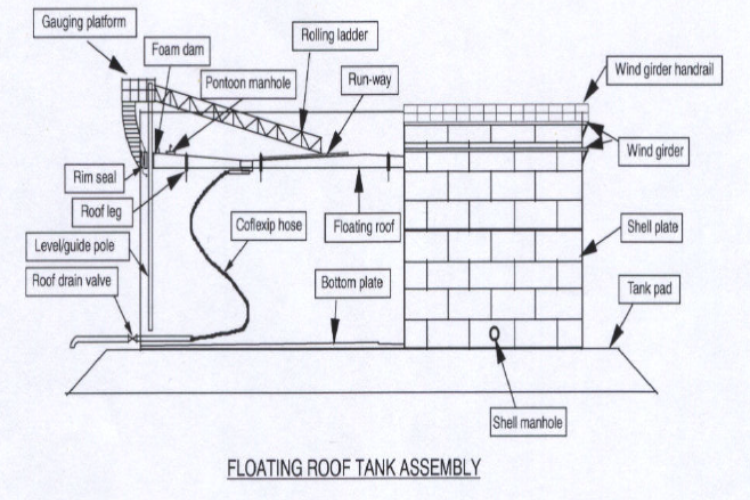
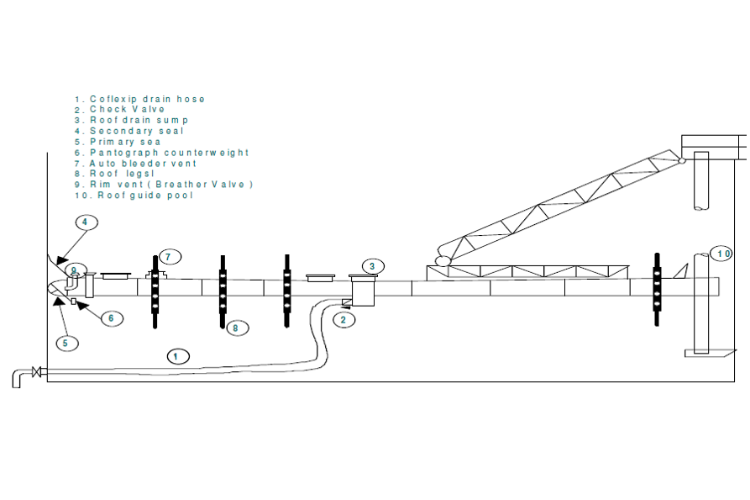
Floating Roof Tank
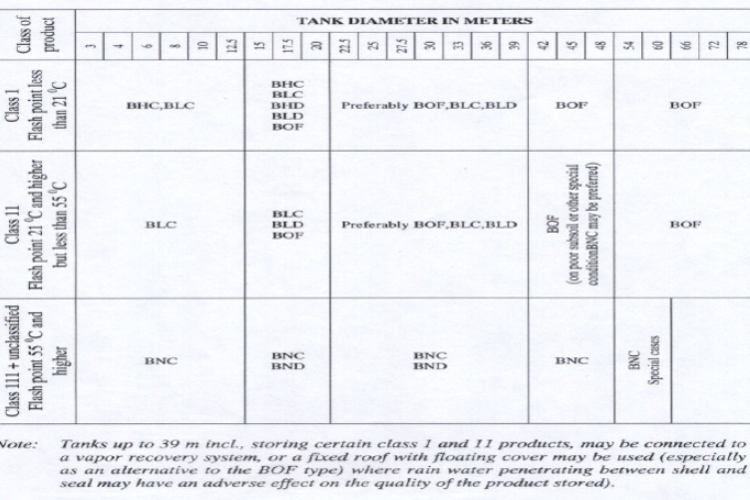
Selection of Vertical Tanks – which tank, which product
General:
The types and ranges of tanks recommended for storage of different classes of petroleum products.
Internal floating roof tank
Internal
floating
roof tank
EXTERNAL FLOATİNG ROOF TANK
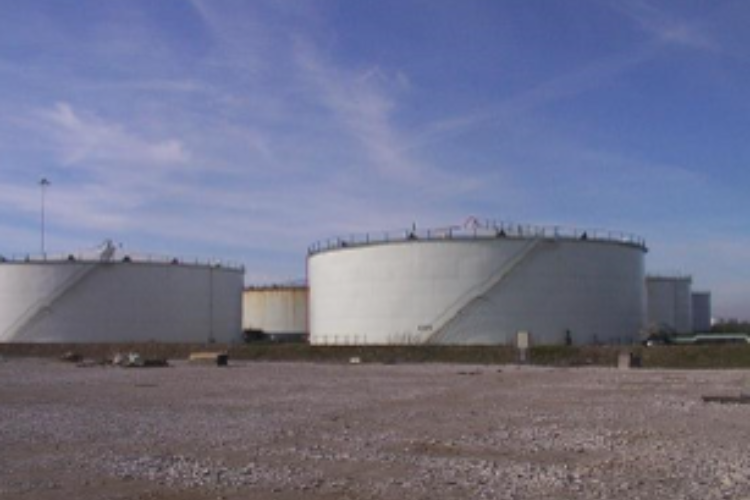
External floating roof tank
6.1 Types of EFRT
1.Single deck pontoon roof
2.Double deck Floating roof
EXTERNAL FLOATİNG ROOF TANK(Cont) (Dış Yüzer Tavan Tankı)
EXTERNAL FLOATİNG ROOF TANK(Cont) (Dış Yüzer Tavan Tankı)
6.4 Seals/ Types
The space between the outer periphery of the roof and the tank shell shall be sealed by a flexible device that provides a reasonable close fit to shell surface Steel shoes with fabric or nonmetallic material used as seal or seal components
Material shall be durable and shall not discolor or contaminate the product stored.
6.4 Contalar / Çeşitleri
Çatının dış çevresi ile tank kabuğu arasındaki boşluk, kabuk yüzeyine makul bir şekilde uyum sağlayan esnek bir cihazla kapatılmalıdır.
Conta veya conta bileşeni olarak kullanılan kumaş veya metalik olmayan malzemeden çelik ayakkabılar
Malzeme dayanıklı olmalı ve depolanan ürünün rengini değiştirmemeli veya kirletmemelidir.